
と思う (to omou) is an expression meaning I think ....と思う is used to indicate one's opinion or idea, often in a subjective way.
と思う is a widely used expression in Japanese. We commonly find this expression when someone wants to express their ideas or opinions, which happens very often during a discussion.
For this reason, it is important to learn how the expression と思う is formed and how to use it. In this post we go to see the origin and meaning of と思う.
What is the expression と思う made of
と思う is the combination of the particle と (quote) and the verb 思う (to think):
- と is used to quote that what is said before
- 思う literally translates the verb
to think
In this way, と思う is used to say that we think what the particle と mentions earlier. Let's see an example:
映画を見に行くと思う。
I think I'm going to see a movie.
We can break this sentence down to understand the meaning:
- 映画を見に行く:
I'm going to see a film, indicates the action that is quoted by the particle と - ~と思う:
I think ..., quote the sentence expressed above by translating the expressionI think I do
How to use と思う
と思う can be used with both verbs and adjectives (な and い), and also with nouns.
In the case of nouns and adjectives in な, the expression と思う must be preceded by the copula だ:
You cannot use です in place of だ. です is always found at the end of the sentence.
To form the polite form instead of using です just conjugate と思う in its ます form (思います):
それは凄いと思います。
I think this is great.
Although と思う requires だ after adjectives in な and nouns, in colloquial spoken language だ is often omitted.
Quotations with the particle と
In this expression, the particle と serves to quote what we think. Its use is simple, and this particle can also be used with other verbs such as:
- 言う: と言う (
my name is) - 聞く: と聞く (
I heard that) - 考える
Since と quotes what is said before, the quote must be in the plain form of the verb.
Difference between 思う and 考える
We also often find the expression 考える to indicate what a person thinks.
The main difference between 思う and 考える is that:
- 思う is more subjective and emotional. It is most often used to indicate worries, hopes, assumptions
- 考える is most often used for logical and objective opinions
Difference between に思う and と思う
It is also possible to find the particle に followed by the verb 思う. In this case the difference with と思う is that:
- (〜 が) 〜だと思う indicates something we think is in a certain way
- (〜 を) 〜に思う indicates how we think or feel about a certain aspect or opinion (towards something, direction expressed by the particle に)
From a comment to a music video:
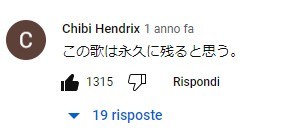
この歌は永遠に残ると思う。
I think this song will last forever.
ないと思う: Negative Form "I don't think"
The negative form of this expression is applied to the elements that precede と思う.
彼はもう来ないと思う。
I don't think he's coming anymore.
難しい difficult If we need to review the conjugation of adjectives: : い and な Adjectives
難しくないと思う。
I don't think it's difficult.
安全な: safe
安全ではないと思う。
I don't think it is safe.
In colloquial and informal situations, you can also find the form でない or じゃない, but in a formal context, it is preferable to use ではない.
彼が医者ではないと思う。
I don't think he is a doctor.
Comment on a Video of a popular anime on YouTube:

これからどんな素晴らしいアニメ映画に出会おうと千と千尋の神隠しを越える事は無いと思う。
From now on, no matter what wonderful anime movie I come across (in the future), I don't think it will surpass ``Spirited Away``.
In this sentence, we find the form ことはない, which is commonly used in Japanese and is formed
by combining the noun 事 koto
thing,matterthe particle は to indicate the topic of the sentence
and the negative form of the verb ある
exist,be: 無:not to be,not to exist⇨ It refers to something that never happens; there is no possibility that The concept expressed in the comment: ⇨It will not happen that another great animated film will surpass 'Spirited Away'.
Similar grammar points in Japanese 📚
~ていく
~ていく (teiku) Meaning Japanese Grammar - Keep Doing
てよかった
てよかった (te yokatta) Meaning Japanese Grammar - I'm Glad That...
それでもいい
それでもいい (soredemoii) Meaning Japanese Grammar - It's Fine
それでも
それでも (sore demo) Meaning Japanese Grammar - Still
させられる・せられる
させられる・せられる (saserareru serareru) Meaning Japanese Grammar - To Be Made To Do Something
ないで
ないで (naide) Meaning Japanese Grammar - Without Doing