まず (mazu) Meaning Japanese Grammar - First

Anna Baffa Volpe
Get in touch with meAnna Baffa Volpe
The adverb まず (mazu) means first of all, firstly, to begin with, before anything else and also for now, anyway depending on the situation in which it is used.
In this post, we learn and review the meaning of まず and when it is used through everyday phrases.
We also analyze the subtle difference between まず and まずは.
How and when to use まず
まず is used to express an action that should be done in priority to others. It is used to communicate what should be done first.
会議を始める前に、まず議題を確認しましょう。
Before starting the meeting, first let's check the agenda.
Position of まず in the sentence
まず is an adverb and can be found either at the beginning of a sentence or in a central position between two sentences.
Its transcription in Kanji is 先ず and as we can see it refers to something preceding, occurring before.
まずその問題を解決しなくてはならない。
That problem must be solved first.
まず上司に話さなければなりません。
You have to talk to your boss first.
まずどこへ行くかをみんなで決めよう。
Let's decide together where to go first.
家に帰ったら、まずお風呂に入って、その後でご飯の準備をする。
When I get home, I take a bath first, then prepare dinner.
In the previous sentence we have found the suffix たら, one of the conditional forms in Japanese with a temporal value expressed with the conjunction when.
何よりもまず健康でなければならない。
First and foremost, we must be healthy.
まず as a synonym for とりあえず
まず is often used as a synonym for:
- とりあえず:
for now,in the meantime,first of all
これでまず安心だ。
For now, I'm relieved.
まず休みしよう。
Let's relax for a bit.
Difference between まず and まずは
Both まず and まずは contain the Kanji 先 meaning before, previous. However, there are subtle differences between the two terms.
まず is used to suggest to someone to do something first, but it is not a strong indication.
For example, we might suggest to someone:
まず、これをやりましょう。
First, let's do this.
まずは is a stronger form of まず. It is used to indicate that something is particularly important or necessary to do first.
For example:
まずは、この問題を解決しましょう。
First, let's solve this problem.
With this phrase we say that it is important to solve the problem before doing anything else.
- まず
first,first of all - まずは
first of all, it's better to do this
まずは、安全を確保しないと、何も始められない。
We can't start anything without first ensuring safety.
Other examples of まず
ご飯を食べる時は、まず手を洗って、それから食べましょう。
When you have a meal, wash your hands first and then eat.
ダイエットしたいなら、まずおやつを食べるのをやめましょう。
If you want to lose weight, first stop eating snacks.
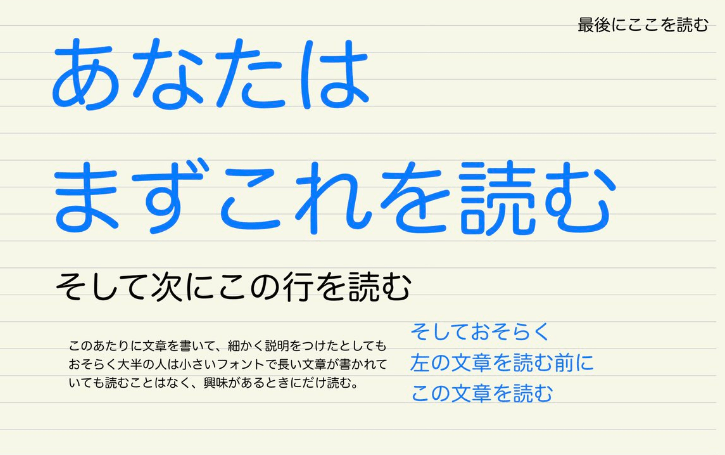
あなたはまずこれを読む。そして次にこの行を読む。
You read this first. Then read this line.
まず説明書の1ページから始めましょう。
Let's start from page 1 of the instructions.
Similar grammar points in Japanese 📚
~ていく
~ていく (teiku) Meaning Japanese Grammar - Keep Doing
てよかった
てよかった (te yokatta) Meaning Japanese Grammar - I'm Glad That...
それでもいい
それでもいい (soredemoii) Meaning Japanese Grammar - It's Fine
それでも
それでも (sore demo) Meaning Japanese Grammar - Still
させられる・せられる
させられる・せられる (saserareru serareru) Meaning Japanese Grammar - To Be Made To Do Something
ないで
ないで (naide) Meaning Japanese Grammar - Without Doing